Crochet Hair Styles: Your Ultimate Guide To Versatile Protective Styling
Ever wondered how to achieve stunning, low-maintenance hairstyles that protect your natural hair while offering endless creativity? The answer might be hiding in your craft basket. Crochet hair styles, a technique borrowed from the world of fiber arts, have taken the beauty industry by storm, transforming from a niche skill into a mainstream protective styling phenomenon. This comprehensive guide dives deep into the world of crochet hair, exploring everything from the foundational techniques to the most breathtaking styles of the year. Whether you're a complete beginner or a seasoned enthusiast looking for fresh inspiration, prepare to unlock the secrets to gorgeous, healthy hair that turns heads and saves time.
The beauty of crochet hair styles lies in their unique blend of artistry and practicality. Unlike traditional sew-in weaves or braids that can exert significant tension on the scalp and hair follicles, the crochet method uses a specialized latch hook needle to loop individual strands of hair—whether synthetic, human, or blending—through a base of pre-braided or twisted natural hair. This creates a secure, flexible, and incredibly versatile installation. The result? A full, voluminous look that allows your natural hair to breathe and grow underneath, making it a premier choice for anyone seeking a protective style. With the global hair extensions market projected to reach $10.8 billion by 2027, according to Grand View Research, techniques like crocheting are leading the charge due to their adaptability and relatively gentle application.
What Exactly Are Crochet Hair Styles?
At its core, a crochet hair style is a method of installing hair extensions using a crochet hook. The process begins with your natural hair being braided or twisted into cornrows, which serve as the anchor base. A crochet needle, which resembles a small hook with a latch, is then used to pull loops of the extension hair through the base braids. The extension hair is typically pre-looped or comes in wefts that are folded and secured, creating a knot-like hold. This technique is distinct from micro-link or fusion methods because it doesn't require adhesives, heat, or intricate sewing, making it a popular low-tension protective style.
The history of crochet braiding is fascinating, with roots deeply embedded in African and African-American hair culture. It gained significant popularity in the 1990s and has since evolved with modern innovations in hair texture, color, and length. Today, it's celebrated not just for its protective benefits but for its incredible artistic potential. The technique allows for the seamless integration of various textures—from sleek straight to coily kinky—and colors, enabling everything from natural-looking length and volume to bold, fashion-forward statements. It’s a testament to how traditional techniques can be reinvented with contemporary flair, offering a customizable hair solution for diverse beauty needs.
The Essential Tools: Your Crochet Starter Kit
To embark on your crochet journey, you'll need a few key tools. First and foremost is the crochet hook. These come in various sizes (typically 3mm to 6mm), with smaller hooks (like 3mm or 4mm) ideal for finer, more intricate work with curly or kinky hair, and larger hooks (5mm or 6mm) better suited for bulky, wavy, or straight wefts. The hook material also matters; stainless steel is durable and smooth, while aluminum is lightweight and affordable. You'll also need your chosen extension hair, which can be synthetic (like Kanekalon or Toyokalon) or premium human hair. A good rat-tail comb for precise parting, hair clips to section your base braids, and scissors for trimming are essential. For beginners, a crochet braiding kit that includes a hook, a few sample wefts, and instructions can be a cost-effective way to start.
The Unbeatable Benefits of Choosing Crochet Styles
Why has crochet hair become a cornerstone of protective styling? The advantages are compelling and multifaceted, addressing common hair concerns from damage prevention to time management.
- Superior Protective Qualities: By tucking your natural hair away in braids or twists, crochet styles shield it from environmental stressors like harsh weather, friction from clothing, and daily manipulation. This drastically reduces breakage and split ends, allowing your hair to retain moisture and length over time. It’s one of the most effective hair growth protective styles endorsed by trichologists and natural hair enthusiasts alike.
- Unmatched Versatility and Creativity: This is where crochet truly shines. The technique allows for an almost infinite array of styles. You can achieve the look of individual braids, twists, or locs without the hours-long installation time. Want voluminous curls? A sleek bob? Goddess braids with beads? All are possible. You can mix textures, colors, and lengths within a single style, making it a true custom wig alternative.
- Time and Cost Efficiency: While salon installation can take 3-6 hours depending on the style's density, it's significantly faster than traditional individual braiding (which can take 8+ hours). Furthermore, with proper maintenance, high-quality crochet styles can last 4-8 weeks, offering excellent longevity. When compared to the recurring cost of salon visits for braids, a one-time investment in quality hair and a skilled stylist (or your own DIY effort) provides outstanding value.
- Scalp Health and Comfort: The technique distributes weight evenly across the scalp because the extensions are attached to the base braids, not directly to the scalp or hair roots. This minimizes tension points and reduces the risk of traction alopecia, a common concern with tight hairstyles. Many wearers also report that crochet styles feel lighter and more breathable than dense sew-ins.
- Low Maintenance, High Impact: Once installed, daily maintenance is minimal. A simple spritz of leave-in conditioner or moisturizer, gentle scalp oiling, and protecting the style at night with a satin scarf or bonnet is often all that's needed. This makes it perfect for busy professionals, active lifestyles, or anyone wanting to simplify their hair care routine.
Popular Crochet Hair Styles: From Classic to Avant-Garde
The possibilities are truly endless, but certain styles have become iconic within the crochet community. Here’s a breakdown of the most sought-after looks.
1. Crochet Braids (The Classic)
This is the quintessential crochet style. Using pre-looped braiding hair, each loop is pulled through a base braid and secured, creating the illusion of hundreds of individual braids. They can be done in any size—micro, small, medium, or jumbo—and with any braid pattern (three-strand, cornrow, etc.). Faux locs are a popular variation, where the looped hair is wrapped and sealed to mimic the look of real dreadlocks without the commitment.
2. Crochet Twists
Similar in method to braids, but using pre-twisted hair. The loops are pulled through and allowed to unravel slightly, creating soft, springy twists. This style is incredibly popular for its bouncy, textured look that beautifully complements natural curl patterns. You can opt for Senegalese twists, Marley twists, or Havana twists, all achievable via crochet.
3. Curly and Wavy Crochet Styles
This is where volume meets drama. Using curly or wavy weft hair (often in a "water wave" or "deep wave" pattern), the stylist folds the weft in half, crochets the loop through the base, and lets the curls cascade down. The result is a full, glamorous, and incredibly feminine style that requires little to no daily styling. Kinky curly crochet styles are particularly favored for their natural, voluminous texture.
4. The Crochet Bob
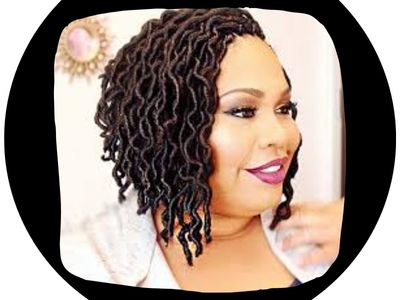
A chic, shoulder-length style achieved by crocheting hair only to a bob-length perimeter. It can be straight, wavy, or curly and is a fantastic way to try a shorter look without cutting your natural hair. A layered crochet bob adds movement and dimension.
5. The Half-Up, Half-Down Crochet
A versatile updo where the front sections (crown and sides) are crocheted with hair, while the back is left as your natural hair or a different texture. This creates a beautiful, framed look and is perfect for showcasing length while keeping hair off the face.
6. The Full Crochet Wig
This advanced technique involves crocheting hair all over a wig cap or a full head of base braids to create a seamless, full-coverage wig. The cap can be worn separately or the entire unit can be installed as a protective style. It offers the ultimate in versatility, as the entire "wig" can be removed and re-installed or styled differently.
7. The Crochet Lace Front
For the most realistic scalp appearance, a lace front closure or frontal is first secured to the braid base. Then, hair is crocheted around the edges of the closure to blend it seamlessly, creating the illusion of hair growing directly from the scalp. This is the gold standard for a natural hairline and part.
Step-by-Step: How to Install Basic Crochet Braids at Home
While professional installation yields the best results, understanding the process is key. Here’s a simplified guide for a basic crochet braid style.
Step 1: Preparation. Start with clean, conditioned, and completely dry natural hair. Deep condition a day before to ensure maximum moisture. Section your hair into the desired braid pattern (usually straight back or diagonal cornrows). The size and number of your base braids will determine the final style's density and part. Braid these sections tightly but not painfully, securing the ends with small rubber bands or clips.
Step 2: Hook and Loop. Take your crochet hook and a loop of braiding hair. Insert the hook under a base braid, about 1/2 to 1 inch from the scalp. Catch the loop of hair with the hook's latch, close the latch to secure it, and pull the loop through the base braid, leaving a small loop protruding. Open the latch, pull the two ends of the loop through that protruding loop, and tighten to form a secure knot. Repeat this process along the entire length of each base braid, spacing loops evenly (typically 1/2 to 1 inch apart).
Step 3: Finishing. Once all loops are installed, you can trim the ends of the extension hair to your desired length and shape. For curly hair, you may need to separate the curls with your fingers to define them. For twists, gently unravel the loops a few times to create the twist pattern. Finally, style as desired—part in the middle, on the side, or create an updo.
Pro Tip: The tension is everything. Pulling the loop too tightly will create stiff, unnatural-looking braids and can cause scalp soreness. Aim for a snug but comfortable fit. For beginners, practicing on a mannequin head first is highly recommended.
Maintenance Tips for Maximizing Your Crochet Style's Lifespan
To get the full 4-8 weeks out of your style and keep your natural hair healthy underneath, a consistent maintenance routine is non-negotiable.
- Nighttime Protection is Paramount: Never sleep on cotton pillowcases. Always wrap your hair in a satin or silk scarf or use a satin bonnet/pillowcase. This reduces friction, prevents frizz, and helps retain moisture.
- Scalp Care is Key: Your scalp still needs attention. Use a light scalp oil (like jojoba or peppermint oil) applied with a dropper directly to the scalp 2-3 times a week. Massage gently to stimulate circulation. A scalp spray with water and a few drops of leave-in conditioner can also refresh the area without drenching the braids.
- Washing Strategically: You don't need to wash the entire style frequently. Focus on cleansing your scalp. Dilute your sulfate-free shampoo with water in a spray bottle, spritz your scalp, and gently massage with your fingertips. Rinse thoroughly with a handheld showerhead, directing water to the scalp and letting it run through the braids. Follow with a light conditioner applied only to the scalp and mid-lengths if needed. Always ensure your braids are completely dry before going to bed to prevent mildew and odor.
- Moisturize Lightly: Avoid heavy creams and oils that will buildup on the braids. Instead, use a light leave-in conditioner spray or a water-based moisturizer to lightly spritz the braids, focusing on the ends. Seal with a tiny amount of light oil if your hair is very dry.
- Retwist or Re-braid Edges: As your natural hair grows out, the edges (hairline and nape) will become visible. About 2-3 weeks in, you can have a stylist re-braid these areas to maintain a neat appearance and prevent flyaways.
Common Mistakes to Avoid for Healthy Hair
Even with the best intentions, some practices can undermine the protective benefits of crochet styles.
- Installing Too Tightly: This is the cardinal sin. Tight braids and tight crochet loops lead to tension headaches, scalp irritation, and ultimately, traction alopecia. Communication with your stylist is vital—speak up if it hurts.
- Skipping the Base Braid Prep: Installing on dry, unconditioned, or tangled hair is a recipe for breakage. Your natural hair must be moisturized, detangled, and in a healthy state before it's braided.
- Neglecting the Scalp: Forgetting to cleanse and moisturize your scalp leads to product buildup, flakiness, and potential infections. A clean scalp is a healthy scalp.
- Leaving the Style in Too Long: While durable, crochet styles have a shelf life. Keeping them in for 10+ weeks, especially with buildup, can cause matting, tangling, and dryness. Stick to the 4-8 week guideline.
- Using the Wrong Hair: Some synthetic hairs are extremely dry, stiff, or prone to shedding. Invest in quality hair that feels soft and has a good texture. For a natural look, human hair crochet braids are superior but more costly.
Who is the Perfect Candidate for Crochet Hair?
The beauty of crochet is its inclusivity. Virtually anyone with hair at least 2-3 inches long can wear it, regardless of texture or density.
- Hair Types: It works beautifully on type 3 (curly) and type 4 (coily/kinky) hair textures, which are most prone to dryness and breakage. However, those with straight or wavy hair can also use it for added length and volume, often as a seamless weave alternative.
- Hair Concerns: It's ideal for those transitioning from relaxed to natural hair, experiencing hair loss or thinning (as it adds density without stressing fragile strands), or anyone wanting to give their hair a "break" from daily styling and heat.
- Lifestyle: Busy moms, students, athletes, travelers, and professionals who want a low-maintenance hairstyle for weeks at a time are perfect candidates.
- Face Shape Considerations: The style's length, volume, and part can be tailored to complement any face shape. A side-part with layers can soften a round face; a center-part with length elongates a square jaw. Your stylist can advise on the most flattering configuration.
Styling Possibilities: Elevate Your Crochet Look
Don't think your crochet style has to be static. With a few tricks, you can transform your look.
- Updos: Gather your crochet braids or twists into a high bun, a sophisticated chignon, or a half-up style. Use bobby pins and hair ellets that match your hair color. Adding decorative pins, combs, or headbands can elevate the look for special occasions.
- Accessorize: Beads, cuffs, and shells can be added to the ends of braids or twists for a bohemian or cultural touch. Scarves can be tied around the head as a fashion statement or for extra nighttime protection.
- Change the Part: Use a rattail comb to create a deep side part or zig-zag part for a new silhouette. This simple change can dramatically alter your appearance.
- Frizz Control: On humid days, a light anti-frizz serum or smoothing cream applied sparingly to the braids can tame flyaways without causing buildup.
Conclusion: Embrace the Art of Crochet Hair
Crochet hair styles are far more than just a trend; they are a powerful tool for hair health, self-expression, and convenience. They represent a beautiful synergy between cultural tradition and modern beauty innovation, offering a protective style that doesn't sacrifice style for health. By understanding the technique, choosing the right hair and tools, committing to proper maintenance, and avoiding common pitfalls, you can enjoy weeks of gorgeous, head-turning looks while your natural hair thrives underneath.
The journey with crochet hair is one of experimentation and discovery. From the classic, earthy elegance of kinky curly crochet braids to the sleek sophistication of a crochet bob, there is a style to match every personality and occasion. So, the next time you ponder, "What are crochet hair styles?" remember it's an invitation to an art form—one where your head becomes the canvas, and every loop and twist is a stroke of creativity that protects, beautifies, and empowers. Dive in, consult with a knowledgeable stylist, and experience the transformative power of this incredible technique. Your healthiest, most versatile hair journey awaits.